
 Posts
Posts


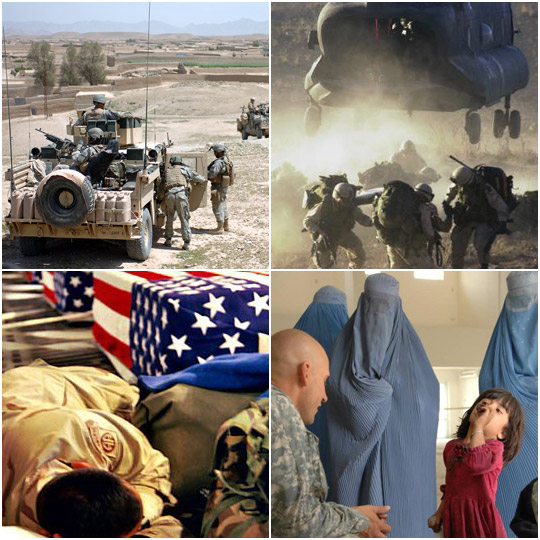

Running head: SOCIAL CONSTRUCTIVISM AND WAR
Anomie or Cradle to Flag-Draped Grave: Social Constructivism and War
Peter A. Brown
Professor Dr. Benjamin Tong
Social Psychology, Fall 2009
Author Note
Peter A. Brown, MA; California Institute of Integral Studies, School of Professional Psychology, Clinical Psychology Doctoral Program; 1453 Mission St., San Francisco, CA 94103; telephone: (415) 575-6100 x 6453.
Anomie or Cradle to Flag-Draped Grave: Social Constructivism and War
The innocent American is the violent American –
which is usually how other nations perceive us.
-- James Hillman, (2004, p. 133)
Abstract
Background: Social psychologists have long studied violence, war, groups, hate and anger, power, and rules that people live by and how people can both decry war in all its forms and devastate whole societies when self-serving views are threatened.
Aims: This paper endeavors to present contemporary and historical evidence on the nature of the relationship between war and social constructivism and offer an integrative synthesis of findings.
Method: This synthesis follows what Torraco (2005) called an “integrative literature review.” In this sense, each article is integrated in order to generate innovations in this area of research and practice.
Results: The results are clear that war is both amenable to social constructivism and impervious to it, while always embedded in a biosocial matrix that uses its self-construction in order to raise consciousness of itself.
Conclusions: A conclusion of this study is the implication for evidence-based practice in healing the wounds of war – that is, an applied understanding of social constructivism as vital in therapeutic settings.
Keywords: social constructivism, war, social psychology
Table of Contents
Social Constructivism & War, Defined 3
Personal Perspective and Positioning Epoche 4
Living Questions and Method: An Exploration 5
From Rush to Mao: “Turn it 20,000 degrees and let’s start over.” 6
Integrated discussion of research: Will the dualists please approach 9
War as embedded in the social matrix: Co-constructed, burned-in – embodied violence 10
War’s Construction-of-Society-through-Destructive-Means Prize 17
Herr Dr. Mengele please report to the lab, the gentlemen from the thought police are here to see you: Constructing warring societies 20
Conclusion 24
References 27
O Lord our God,
help us
to tear their soldiers
to bloody shreds
with our shells;
help us
to cover their smiling fields
with the pale forms
of their patriotic dead;
help us
to drown the thunder
of the guns
with the shrieks
of their wounded
writhing in pain;
help us
to lay waste
their humble homes
with a hurricane of fire;
-- Mark Twain, from The War Prayer, 1923 (Hillman, 2004, p. 201)
Anomie or Cradle to Flag-Draped Grave: Social Constructivism and War
“Why did millions of people begin to kill one another? Who told them to do it? It would seem that it was clear to each of them that this could not benefit any of them, but would be worse for them all…the causes were innumerable and…not one of them deserves to be called the cause.” For Tolstoy war was governed by something like a collective force beyond individual human will.
The task, then, is to imagine the nature of this collective force. War’s terrifying prospect brings us to a crucial moment in the history of the mind, a moment when imagination becomes the method of choice, and the sympathetic psychologizing learned in a century of consulting rooms takes precedence over the outdated privileging of scientific objectivity. (Hillman, 2004, p. 7)
The above quotation from Tolstoy with commentary by James Hillman illustrates a commonly held fact: alongside a failure of imagination, culture and the society’s attitudes toward violence are primary factors in its spread (Elbert, Rockstroh, Kolassa, Schauer, & Neuner, 2006, p. 342). At the individual-as-embedded-in-culture level, one study found that between “34% to 45% of the interstate…serial killer activity could be accounted for by dimensions of local culture, with higher rates of violence being found in states supporting game hunting, military training, and a local culture supporting punitive violence” (DeFronzo & Prochnow as cited in Elbert, 2006, et al., p. 342). In any society, these are crimes and are outlawed; with war, at least of the traditional and historical variety, with thousands if not millions of combatants, wars and armed conflicts seem to have slipped through institutionalized ‘loop-holes’ (Elchenroth, 2006, pp. 907-8). After the bloodbaths in Rwanda and Yugoslavia, and
[a]s a reaction to the threat for the respect of fundamental rights caused by periods of armed conflict and by the breakdown of national institutions, there have been repeated efforts from the international community resulting in the growing institutionalization of international humanitarian law, which is supposed to compensate for the legal loophole generated by armed conflicts, by defining the principles of a minimal and irreducible law. (pp. 907-8)
However, does this push cover the seeming escalation of the “new wars” of organized violence? These new wars are state sponsored - harassment, torture, terrorism – and over 90% of these are intra-state conflicts, civil wars, and actions by rebel armies (using irregular forces, affiliations to different groups – ethnic, religious, etc., targeting civilians – over 80% of the casualties of new wars are civilians, and due to economic factors, including use of foreign resources to fund them) (Elbert, et al., 2006, pp. 343-4).
Naturally, there are consequences of these wars at both the individual and collective levels. Prevalence rates for trauma spectrum disorders – that is, disorders that incapacitate - range from 20% to as much as 60% (p. 344). These figures effectively wipe out communities and their abilities to recover from war, and produce secondary effects on the population such as domestic violence, intimate partner violence, transmission of trauma, further warring, and fosters a cycle of violence in whole regions and continents (most poignant in Africa) (pp. 344-5). These devastating effects have been referred to as “societal trauma” (p. 345).
Social Constructivism & War, Defined
This paper examines the relationship between war and social constructivism. Social constructivism is a critical theory that emphasizes a socially constructed view of reality by those involved; either emically – as insiders – within a context of time and place and supplanting a more positivist search for universal truth, or a more etically oriented – that is, ‘objective’ and outsider - perspective (Miller, Kulkarni, & Kushner, 2006, pp. 412-3). Emically, this paper eschews a positivist stance - despite the flavor and structure of an ‘integrative literature review’ as a legitimate, scientific method – in favor of a more pluralistic and constructive, postmodern view.
The late Dr. Sue Mansfield, Professor Emerita at Claremont McKenna College (Claremont, CA), who died in 2002, defines war as:
a particular type of institutionalized aggression in which social pressure is used to force individuals to kill other people they may not even hate or fear [or know]…[and] through which a group of individuals attempts to satisfy its needs by destructuring and imposing its will on another group. (Mansfield & Keen, 1982, p. 382)
Naturally, war might also be considered a state of anomie, where lawlessness prevails. On the other hand, war can also be constructed and used by societies. War is socially constructed in that it is fought over a differing construal of reality, truth, or belief. It is also far beyond that which a society can collectively understand, as it typically destroys societies. There are rules of war, war propaganda, war crimes, illegal wars, ethical wars, and total wars. There are honors in war, war hawks, societies or brotherhoods of war, war trophies, winning over hearts and minds, ethnic cleansings, truth and reconciliations committees, war crimes tribunals, holocausts, genocides, fratricides, and any number of destructive and counter-destructive acts of war and reactions to war. War confuses, enrages, and changes everything in its path.
Personal Perspective and Positioning Epoche
As a former Regular Army Captain, combat veteran, military academy graduate (USMA-West Point, Class of 1996, graduate [Cullum] number 53,003), I have some firsthand knowledge of rules of war, if captured was to be held to Category III of the Geneva Conventions (that is, a ranking system that also provides for pay to prisoners of war; Cat., III is for warrant officers and those commissioned officers below the rank of Major, who holds Cat. IV), the conduct of war, and the feel of war – that unmistakable pungency, the electricity and fear in the air; the sweat and the heat, the roar. I have shipped youth home in metal boxes and have helped put them in the ground; both close colleagues and strangers. I have luckily survived and can report that my hands are clean, though I fear much has rubbed off on me. I have had the opportunity to study the great wars, the strategists and generals, the participants, and battlefields. Despite this, in the wake of what is being called “The Fort Hood Massacre,” I am left shaking my head. Perhaps at the aggrandized and glorious end of the war-spectrum, “[a] wartime perception of reality has a "mythic" quality,” (Social construction of war, 2003). War has a particular salience in my work; that about sums it up.
Living Questions and Method: An Exploration
Social psychology has long sought to understand the problem of human suffering, especially with regards to Aronsonian categorization of the field: conformity, mass communication/propaganda/persuasion, cognition, self-justification, aggression, prejudice, loving/sensitivity, and science – perhaps boiling down to social influence that people have over others (Aronson, 2009, pp. v and 6). Perhaps then, this study is best suited to asking further questions in lieu of providing quasi-positivist ‘reality-as-it-really-is’ answers, exploring instead: “what are factors at play in influencing people’s relationship to war?” or “how does social constructivism relate to war and thereby influence people?” or “does social constructivism capture the manifold valences of war?” With these questions in mind, I aim to explore some of the relevant literature, while integrating material from authors in the fields of social psychology, neuropsychology and neuroscience, philosophy, anthropology, traumatology, and even some practitioners of psychotherapy. While this may seem like a vast area of research, the exploration serves as performatively oriented social construction of war, by way of dialogical argument.
Perhaps, too, it is important to mention that this study is by no means an exhaustive review of the literature, nor does it attempt to solve the dilemma of war, offer a groundbreaking theory, or cover every angle. Rather, my curiosity in the area of intersection between social constructivism and war piqued my interest sufficiently to design the present study according to a hybridization of what Torracco (2005) calls an integrative review of the literature, compellingly relevant to the study of social constructivism.
The method of literature review was to search using a common database. Some interesting studies turn up in the research and peer-reviewed literature, albeit largely in philosophic, qualitative, or case study format. In a search of one database (PsychInfo), I found 13 articles, 2 of which were brief reviews of much larger works, and 7 of which were suitable for inclusion in this paper based on keyword criteria, availability, and dated after 9/11(/2001) (keywords: social constructivism, war, violence, combat, trauma, construction, constructionism, constructivism and variants by thesaurus and combined search options).
From Rush to Mao: “Turn it 20,000 degrees and let’s start over.”
The rationale for this review of social constructivism and war, especially in terms of social psychological methods and their application, is my ongoing research into the nature of epistemic concerns in the research and treatment of combat veterans. These epistemic concerns, really a critique of whole, socially constructed, dogmatic paradigms of scientific hegemony, are not unlike religious belief systems where the diversity of others’ views are largely neglected, dismissed, and sometime, outright destroyed through violent means. This is not to say that scientific domination is the responsible culprit for wars in the world today, rather, that it is in the very beliefs themselves that power brokers use to maintain an intolerance of diversity.
Take for example, James Hillman’s book A Terrible Love of War, where he cogently argues that the Judeo-Christian ethic, as purveyor of monotheistic, patriarchal belief systems, is, at its root, a violent system that elicits warmaking (2004). Hillman wasn’t alone in his condemnation of the Judeo-Christian monistic and violent belief system, either. Perhaps Dr. Hillman knew Sue Mansfield who said: “Christian culture is at once more pacifistic in its intent and more violent in its action than any other culture that has existed” (Mansfield & Keen, 1982, p. 385). Hillman notes that
[w]ar presents theological dilemmas about the nature and intention of a one and only almighty God whose goodness and mercy are exalted by the three great monotheistic religions. By definition this God has the greatest power; there is nothing he cannot do – that is what omnipotence means. So why does he not put a stop to war? … Either he can’t stop war or he doesn’t want to. The first rebuts his claim to almightiness and the second implies that he likes war, or at least by not stopping it, he sustains it” (Hillman, 2004, p. 187).
It is perhaps clear that Hillman, a post-Jungian, founder of archetypal psychology, and a veteran of World War II himself (he was a corpsman in a hospital treating some of the more grisly injuries of the war), sees tolerance and belief as core splits that precipitate war:
[b]ecause a monotheistic psychology must be dedicated to unity, its psychopathology is intolerance of difference. Hence the issue of toleration has plagued theological thinkers for ages, leading to schisms and more schisms. As long as you hold that your god is the perfect supreme deity, all other gods will be lesser. There are no several truths, no other roads to the Kingdom. …Moreover, as long as the others, the lesser, continue to practice their precepts and believe in a different god (or a slight variation in the nature of your god), they exhibit in their very existence a denial of the complete truth of your god. It is a necessity of your truth and your faith to war against them, because no matter how quietly they live or how far away their territories, their existence places in essential doubt the foundations of your belief in your god [or politics, or money, or epistemological ground, or philosophy…and provides ample opportunity to fight ever more strongly for the cause of defending the faith, nation, etc.]. (Hillman, 2004, p. 183)
Social psychologists aren’t only complaining; they are also involved in researching the attempted control of war, through social justice efforts. One article I reviewed presented evidence to substantiate four major research programs in thinking about justice and war: 1) social justice is constructed and embedded in the same frame as the viewer – that is, people see it in their own terms (especially involving the fundamental attribution error (Jones & Nisbett as cited in Hatfield & Rapson, 2005, p. 173), 2) people define social justice to serve themselves (especially in primatology and in entitlement, neurobiology, etc.) 3) authority, power, and peer pressure have tremendous influence on how people treat each other, (Milgram, Zimbardo, et al.) and 4) emotions determine social justice views and how people treat each other (emotional contagion, basic biopsychology and neurophysiology, and research showing that people, when angry and frustrated will take it out on scapegoats – witness the holocaust, Stalin’s and Mao-Tse-Tung’s purges) (Hatfield & Rapson, 2005, pp. 172-4). Perhaps the best example of these is an excerpt from the infamous Rush Limbaugh, commenting on “his angry and nationalistic reaction to hearing of the American’s torture of the Abu Ghraib Prison prisoners in Baghdad, Iraq, and the subsequent killing of an American hostage [by beheading]” (p. 174) quoted here at length:
They’re the ones who are sick..[.] They’re the ones who are perverted. They’re the ones who are dangerous. They’re the ones who are subhuman. They’re the ones who are human debris, not the United States of America and not our soldiers and not our prison guards… [On Nick Berg’s beheading:] I thought I saw a couple smiles through the mouth holes in the mask, and at that instant I wanted to call George Bush and say, “Level the place. Turn it 20,000 degrees and let’s start over. …They don’t deserve to live. They don’t deserve sympathy. They don’t deserve understanding. They don’t deserve compassion. They don’t deserve traditional justice… To hell with rights and all this stuff. I wanted to be in the charge leading into that room to wipe ‘em out. (p. 174)
Integrated discussion of research: Will the dualists please approach
Several articles provide good material for the present study and raise several issues for consideration. For simplicity of presentation, the following indicate several positions in what I consider to be a debate for a positive correlation between social constructivism and war, and its counterpoints and alternatives. I will discuss each in turn, and synopsize with a brief conclusion.
War as embedded in the social matrix: Co-constructed, burned-in – embodied violence
In an attempt to understand war, look up the social construction of war in a Google search, and find striking headlines such as: “Females seem to find war to be an aphrodisiac…War makes people feel so alive… War: Comprehending Its Mystique and Its Madness…Letting out the (war) dogs…War is a force that gives us meaning…” and others. Indeed,
during wartime, notions of good and evil become black and white--it's us vs. them; the future of history hangs in the balance … the enemy acts out of a will-to-power, whereas we act out of self-defense, benevolence and a commitment to the fight; since the enemy is evil and untruthful, communication is impossible--only force will settle the conflict; the same actions are good when we do them, evil when the enemy does them; we are concerned only about outcomes, not causes of the conflict; and citizens who take umbrage with these perceptions of reality are considered traitors. (Utne as cited in Social construction of war, 2003)
In familial terms, Schore (2003) cites “why interpersonal deprivations and failures in the earliest stages of human development serve as a primordial matrix for a personality that is at high risk for violence” (Schore, 2003, p. 107) and that “experiences in infancy which result in the child’s inability to regulate strong emotions are too often the overlooked source of violence in children and adults” (Brazelton as cited in Schore, 2003, p. 107).
Even from the very beginnings, paternal abuse and neglect, indeed, any disruption in so-called natural biorhythms of man and infant or woman and infant, results in early imprinting of corticolimbic (especially right hemisphere) structures that are in a developmentally vital phase (first 2 years of life) (Schore, 2003, p. 130). Especially in cases of repetitive early abuse or neglect, it is in
this spatiotemporal imprinting of terror, rage, and dissociation [as the caregiver is also abuser, therefore the infant has no where to go for comfort except dissociative mechanisms which become ever more sophisticated and organized] is a primary mechanism for the intergenerational transmission of violence. (p. 130)
Clearly, then, violence begets violence, and very often this happens in the man-infant relationship, where little boys first learn modulation of fear and aggression (p. 130). Witness, too, the presence of seemingly innocuous exemplar of violence in movies and on TV, providing “all kinds of evidence to the effect that violent solutions to conflict and frustrations are not only predominant but also valued” (Aronson, 2008, p. 296). These formative experiences and reinforcements affect our neurophysiology, as we shall see.
Indeed, in postnatal development of the frontal lobes, especially the ventro-medial prefrontal cortex (vmPFC, and its role in limbic modulation of affectual triggers, ‘high-road’ inhibition) (see also Carlson, 2010; Zillmer, Spiers, & Culbertson, 2008) and orbitofrontal cortex (OFC) where traumatic or neglectful early attachment relationships lead to the aforementioned imprinting and ‘in-burning’, the amygdalic response to environmental stimuli is not regulated by the frontal brain structures, thereby leaving the person vulnerable to aggressive dysregulation and attacks of rage (pp. 134-6).
This begs the question, are biopsychological correlates of behavior not also embedded in a socially constructed reality? In a sense, the body is embedded, insofar as the cycle of transmission of aggression and violence has biological correlates to behavior, and certainly in that ‘parenting’ practices are socialized. Further, “the body may symbolize a society, and the dangers that threaten a society can be compared with the dangers threatening the body…rituals [therefore] work upon the body politic through the symbolic medium of the physical body (Douglas as cited in Sigurdson, 2007, p. 246).
Okay, but how does the biopsychological undermine or support the idea that war is socially constructed? Another way at approaching this question is through co-constructive (the confluence of genetic-biological and external, sociocultural systems) approaches (Elbert, et al., 2006, p. 327). So, is war a culturally determined expression of gene-potentiality (p. 327) and thereby an imposed, institutionalized “structure and function resulting from a history of genetic expression” (p. 327)? It certainly sounds plausible, though I might caveat this with allusion to the larger debate in the field of biopsychology and neuroscience, that of the post-traumatic neurotoxicity hypothesis versus the genetic predisposition hypothesis and refer the reader to an article I wrote available at: http://peterallenbrown.blogspot.com/2009/11/traumatic-predisposition-or.html . This gives ground for co-constructivist examination of how wars of terror and violence influence the brain, which individuals subsequently distribute to the society at large; the literature notes a
qualitative change in the way wars are waged and organized violence is exerted; in other words, a transformation in the culture of violence… [is at hand]. Moreover, scientific methods are available to study how traumatic stressors change individuals and communities so we can expect increasing knowledge about how social stressors and related learning conditions shape the structure and function of both the brain and the “societal mind,” including individual behavior and interactions on the community level. (p. 327)
Taking a bit of an implicit and inductive tact, Schore (2003) puts forth both the idea that biological correlates of neurological damage and relational trauma (abuse and neglect) contribute to “neurologically acquired sociopathy” (p. 137) (reminiscent of the legendary case of Phineas Gage – see also Zillmer, et al., 2008). The ideas of “hostile attributional biases” contribute to this line of thinking, in that it is believed that early onset antisocial boys (7-11) have these biases acutely activated as threats to the self, integrated in their “hostile world schema” (Dodge & Somberg as cited in Schore, 2003, p. 140). These are mechanisms of the cycle of violence, where the individual, embedded in community relationships, internalizes and structures himself or herself around and within the social matrix. It is clear from much of the research that people inculcate traumatic memories (amygdalic emotional learning) and that the collective memory trace (read: intergenerational transmission of trauma) precipitates violence through the aforementioned relational mechanism (see also Elchenroth, p. 910).
Therefore, it is my contention, and that of others - including Dr. Mansfield, that war as social construct starts in the arms of mother and father, really with the whole lineage of war and aggression. Even in pre-history, the institutionalization and reification of war follows distinct patterns of influence, literally, from cradle to grave (see also Mansfield & Keen, 1982, pp. 381 & 383). Even the reinforcement paradigms evolved from kings and rulers into the (patriarchal) family, supporting a feudal system of greed and materialist reward, using aggression and war as institutional purveyors of rage, discipline, and guilt (p. 383). This system eventually, and in terms of which Skinner might approve, became conditioned to equate goods with love, thereby awarding/reinforcing aggression with goods/booty, and finally making the extension (or stretch) that war is love (hence the elites diversified desires for goods – read: love - used aggression and war to satiate those desires) (see also Mansfield as cited in Keen, 1982, p. 384). Indeed, this reinforced (especially in the US) social matrix provides role models of violence as early as possible. Here, I feel moved to include a passage of some of the thoughts of Ron Roberts on this theme, as particularly salient and quoted here at length:
[c]onsiderable evidence exists that both the US and UK have nurtured the growth of extremist movements [even individual people] in areas of strategic interest (Ahmed as cited in Roberts, 2007, p. xi)…this ‘alternative’ narrative involves a profound reframing of the psychology that accompanies acculturation into Western society – in particular how and why people internalize the motives of Western governing elites [especially in regards to the obviously – at least as easily seen by those outside of the ‘West’ – aggressive, vindictive, and single-minded pursuit of energy, wealth and power]. … What does this tell us about our own psychology? … [Is the US actually preparing] citizens (children and adults alike) to not only accept the state’s actions but to assume benevolence in its intentions[?] … [Is this] a new postmodern variant of totalitarian rule fashioned by the security state [and propagated, executed, and controlled by complicit fields such as psychology] to safeguard elite interests at home and abroad, as well as the idea, unspeakable in our own media, that ‘we’, i.e. the… alliance of Britain, the US and Israel, do not want peace in the Middle East. Implanted deep in the American and British psyche is the product of a grand deception – the notion that we are continually exploring all means to bring peace, stability, justice, human rights and democracy to the world. The opposite fact appears more likely to be true: that all available avenues are followed to avoid peace, to wage war, to solicit evidence from torture and to antagonize people around the world toward position of hatred and violence…. This reality somehow survives outside of any critical scrutiny, even in the face of widespread skepticism about the motives of individual politicians. As the window on this hypocrisy opens ever wider, people in the West face the loss of the moral legitimacy of their culture in the wider world. … A common theme in this analysis is the power of social representations: of warfare, terrorism, and political action to shape our culture (a culture that has been engaged in military action abroad) and the actions of individuals within it. The theory of social representations makes possible a different kind of critique than that afforded by the experimental social psychology of the 1960s and 70s. It is not that the world of Stanley Milgram or Philip Zimbardo is no longer relevant to any understanding of the events unfolding in Iraq – particularly with respect to the commission of war crimes and torture at Abu Ghraib... but in the 2000s there is a need to look beyond these situationist accounts and direct our gaze at the wider culture within which the meaning of these actions are to be found – for actors and interpreters alike. (2007, pp. xi-xiii)
Foucault would approve and remind us that the roots are quite antique; the seekers of a perfect society (18th century) also sought a perfect militaire, with fundamental reference to “permanent coercions, not to fundamental rights, but to indefinitely progressive forms of training, not to the general will but to automatic docility (1979, p. 169).
Perhaps as a response to Roberts’ condemnation, albeit years prior and arguably a particularly insidious and backwardly subtle part of the rhetoric against which Roberts writes, an organization called the Psychologists for Social Responsibility (PSR), issued a statement that belies support of the very language that the PSR claims to decry. For example, the statement uses language such as in the urging of the UN to “thwart claims that the US has imperialist intentions in the Middle East…reverse the images of the US as a country that is unable to cooperate with other countries, threatens force when it doesn’t get its way, and breaks its word in international agreements,” (Washington, DC, US., 2003, p. 160) (perhaps this image is an honest account of US policy?). I might translate this statement as ‘help us help you move back into denial about our stance, give us peace as an to help us forget and repress’ about which Hillman also writes (peace as anesthetic of war and arguable cause of future wars; 2004). The tone of the PSR statement did not seem to help a struggling psychological field, in time of war, to frame its social responsibility as helping the populace to forget – ironic perhaps that it was published in a journal called Constructivism in the Human Sciences; how apropos.
War’s Construction-of-Society-through-Destructive-Means Prize
All I know is what they told me at command school. There are certain rules about a war.
Rule number one is ‘young men die.’ Rule number two is that ‘doctors can’t change rule number one.’
-- Colonel Blake, Commander, M*A*S*H (to Hawkeye, after his patient dies) (Humphreys, 2009, p. 716)
In setting up this debate, I earlier referenced so-called power brokers, promulgators of beliefs that maintain an intolerance of diversity. These power brokers might even be whole fields of study, like psychology where:
[i]t would be an act of supreme folly should we [psychologists] choose to ignore these global developments [referring to globalization, increasing economic disparities, induced climate changes, destruction of the biosphere, and the coming energy crisis consequent on the depletion of the planet’s natural resources…lead(ing) to further major conflict…(like) Iraq, Afghanistan and the ‘War on Terror’ (as)…manifestations of the end of the petroleum age, and the beginning of the battle for control of the world’s remaining energy reserves], hanging on desperately instead to an intellectually and morally bankrupt position which asserts the irrelevance of these things to psychology and psychologists. (Harper, Roberts, & Sloboda, 2007, pp. 222-3)
In fact, social psychologists of many camps, both the realistic-conflict- theorists and international-relations-thinkers (who generally favor power asymmetry hypotheses) in contrast to social-constructivists and social-identity-theorists (who favor shared identity-modulated threat perception) all have salient and important contributions in thinking about how people are likely to view powerful, threatening ‘others’ (Rousseau & Garcia-Retamero, 2007, p. 744). In one sense, this too is a construction of meaning used to understand warmaking. However, what these thinkers are finding, in their ‘hard-data’ experiments is that both power asymmetry and shared identity influence perception of threat in a systematic manner (p. 744). In fact, the authors of the study found, perhaps counterintuitively, that shared identity moderates the perception of power balance (high identity similarity equates to lower threat perception, which increases cooperation); naturally, as “shared identity decreases, the material balance of power becomes a more powerful predictor of threat perception” (p. 766). (The authors demonstrated these findings experimentally using a 2 x 2, between participant, design, including manipulation checks and an N=169.) This is important because the authors provide evidence for the systematic effect of ideas on threat perception – if a state needs an enemy, it may be easier to find one that is most dissimilar to blame – and history bristles with examples (any fascist dictatorship or hawkish state). Therefore, in shaping a (warring) society, there are factors both within (ideas and perceptions) and without (overt acts, etc.) – all taking place within ever-larger nested layers of a social matrix.
Are there any limits? Indeed, and it is perhaps vital to consider the confines of the social matrix, the ‘biosphere’, and how this ultimately shapes the construction of a social reality. These global challenges seem to demand the people of the world to regulate its population, with evolutionary forces and the survival of the fittest leading to wars of scarcity and competition for ever-dwindling resources.
Interestingly perhaps, is an article in the November “Awards Issue” of The American Psychologist – the flagship journal of the American Psychological Association – also recently presented at the APA’s annual conference in Toronto, Ontario, Canada, and for which the author, Dr. Keith Humphrey’s of the Palo Alto VA Health Care System, was awarded the “Award for Distinguished Early Career Contributions to Psychology in the Public Interest.” Dr. Humphreys’ article (2009) discusses the role of psychology in mental health provision of services to those affected by war, with special attention to “social problem definition,” (p. 713) which is how the psychology profession ‘reframes’ problems in such a way as to ensure ‘successful’ application of resources. This very interesting point is perhaps, on the surface - at least for Dr. Humphreys - simple, requisite, and obvious, though he states that
[t]he problem of problem definition often involves intense political struggle… because stakeholders appreciate that once a social problem is defined in a particular way certain policy responses seem more logical than others… In addition, a faulty problem definition can lead to the pursuit of a path that will never resolve the problem given infinite resources. (p. 714)
Curiously, this statement begs the question, that Dr. Humphreys cursorily addresses earlier in the article, that, ‘if a problem is really a problem, doesn’t that mean that by nature it is something about which is unknown, over which people struggle, for which resources allocated, and for whom there is some special interest?’ Interestingly, Dr. Humphreys’ earlier, brief reference was that one of his mentors referred to unsolvable problems as ‘facts’ and that was the rationale for altering the conceptualization of the problem. I might conjecture that the manipulation of problem definition is a means of social constructivism by power brokers who have the ability to alter reality such that their power remains dominant. This is a dark-side of post-modern thinking in that the shifting sands of thought, knowledge, and power, are easily changeable for those with resources to change social structures, laws, rules, and even language. This might be an appropriate time to introduce a historical view, from perhaps the most notoriously able reality-warping machines of all time, the Nazi Third Reich.
Herr Dr. Mengele please report to the lab, the gentlemen from the thought police are here to see you: Constructing warring societies
With regards to human experimentation and altered construction of reality of a particularly evil variety, a very interesting article I reviewed was on the neurosciences during Hitler’s Third Reich. According to Karenberg’s synopsis of the Nazi health policy, where “euthanasia, eugenics, and therapy were the three pillars…many researchers set ethical norms aside” (2006, p. 169). In a particularly poignant example of the brutality of man again man at war, and the power-broker’s ability to construct reality to support their own ends, these neuroscientists and psychiatrists in 1930s and ‘40s Nazi Germany began to find “interesting cases” in those who were treatment refractory/resistant or otherwise incurable and who also been first clinically observed and then murdered; who readily offered up – so to speak – their brains for histological examination (p. 169).
These diabolical social actors used science as social constructivist mechanism in time of war to further their scientific agendas. Parenthetically, and perhaps in acknowledgement and reparation of these horrors, many burials have taken place in recent years, complete with a German presidential apology in 2001 for “the suffering caused to the victims of these crimes in the name of science” (Markl as cited in Karenberg, 2006, p. 170). This reconstruction of the chaotic is revisited at the end of this section.
So, why examine a work such the Nazi example? The outrage and the imagery are atrocious and revelatory of the depths of human evil and the deliberate use of these depths to alter whole worldviews. I bring this work to illuminate the dangerousness of
state control from above instead of need-driven planning; the intertwining of science, the military and industry; dissolution of science and enlightenment; human experiments, some of them resulting in death…[s]hall we selectively define only a few of the historical periods…[?]…[or is society merely doomed to repeat history…shall I compare the NIH or NIMH to the Third Reich?]” (p. 170).
Perhaps these are far fetched, but Karenberg anticipated such a response. Quoting Shevell and Pfeiffer, Karenberg mentions that it is not adequate to simply state that the Nazi regime is a good example of what not to do (p. 171). Rather, he mentions several reasons why this is inadequate: 1) pure science in search of truth no longer exists and it is clear from examples such as these that there are political, financial, and social pressures that exert tremendous influence, 2) the Nazi example shows the medical fields the enduring conflict with ethical values (perhaps as a method of social control and constructivism in and out of war; see also the writings of Ken Pope against the APA for its lack of action against torture, www.kenpope.com) – “where and whenever the desire for scientific progress dominates and is made superior to all other moral values, that is where and when the ‘dark side’ of medicine will be found…” and 3) memory and history are fallible and prone to distortion (and/or manipulation or deliberate social construction (pp. 171-2). The images of the holocaust reverberate around Karenberg’s article, apropos to this present study.
While psychological research is perhaps different than the biological, for reasons more obviously owing to the physiology of the human body (which is also subject to the effects of social construction), there is, alas, ever a wound, psychic or bodily. These differences, between psychological and the biological, are perhaps encompassed in the fact that researchers seek out “subjects” (even the word choice, subject v. research participant, is revelatory) who do not always understand what is going on, data collection is self-serving in order to complete studies (itself a social construction), and there are “intense motivation[s] to gather data and other personal needs and agendas” (Koocher & Keith-Spiegel, 1998, p. 415). Certainly, the psychological and societal wound of the holocaust endures, even after the last brain specimen collected by euthanizing, self-serving, warped-constructivist, Nazi eugenicists, (and of the Nazi’s themselves,) have long since decomposed.
Before wrapping up this debate, I need to return to the point on reconstruction out of chaos and the German presidential apology. This last position is that of the very influential and institutionalized (read: constructed) upholders of the collective vulnerability worldview: the International Committee of the Red Cross (ICRC) and a long arm of international humanitarian law: the Geneva Conventions (GC). The GC turned 50 years old in 1999, and celebrated with a large survey of some 12000+ people of war torn lands on their thoughts about war (Elchenroth, 2006, p. 914). These people provided a surprising perspective, especially as masses of individuals who experienced tremendous vulnerability and a common fate whilst living in war zones (2006). From this study, and Elchenroth’s (2006) reanalysis of the data across cultures, it is clear that war causes people to experience great ambiguity especially with regards to their social norms and principles (pp. 911-2). In the context of uncertainty, the demand characteristics are for the community to modulate the tension (that is inherent in uncertain situations) of war, in order to reconstruct what has been de-constructed, made irrelevant, and that which has been destroyed (p. 912) – much as the German president attempted to do by apologizing these many years after the holocaust. That said, after whole communities, not just individual sufferers of war trauma, suffer systematic violence, they become objectified and their impacts are felt even beyond group boundaries and enter into every facet of life in the society, rendering all its populace vulnerable, which leads to a reshaping of belief systems, values, and meanings (p. 925), not to mention further propagation of violence, both interpersonally and societally – and here I return to the opening section of this paper and the data on both serial killers and intergenerational transmission of trauma. Even the humanitarian law itself is objectified as it is created contextually, in times of war, to protect those vulnerable to objectification (p. 925). The findings from this study, perhaps paradoxically, spell out that
within post-war societies, [individual] victims of war are less likely than their community fellows to adopt a legal perspective when judging war behavior…[which calls] into question claims that trials have some kind of therapeutic value and can provide a sense of closure to those most traumatized by war and mass atrocity…[alongside the finding that, at the collective level, it is] an important desire for seeing formal justice being held within those communities that have been the most strongly affected by collective war trauma, as a reaction to common experience of generalized vulnerability. (p. 926)
Conclusion
Interestingly, I find that as I reflect on this study, I notice that there seems to be an ever-expanding spider’s web of information and linkages to other fields, ideas, and approaches – in fact, I am starting to feel a kind of uncertainty about the material – a kind of desperation in the literature, now that I am moving toward conclusion. Foucault might have said, ‘bravo’ and echoed that
[t]he positivity of a [historical a priori] discourse…characterizes its unity throughout time, and well beyond individual œuvres, books, and texts. … Different œuvres, dispersed books, that whole mass of texts that belong to a single discursive formation – and so many authors who know or do not know one another, criticize one another, invalidate one another, pillage one another, meet without knowing it and obstinately intersect their unique discourses in a web of which they are not the masters, of which they cannot see the whole and of whose breadth they have a very inadequate idea… . (Foucault, 1972, p. 126)
Perhaps this entangled web of the de-construction of constructivism is what Kaisa Puhakka (2008) meant by the ‘post-modern malaise’. Perhaps it is that the field of psychology, with ever-greater range of methods and theory to choose from, loss of coherence and the accompanying uncertainty, and a new openness to alternative views – that the malaise sets in. Fortunately for us, Dr. Puhakka gives us an antidote in the form of transpersonal psychology (p. 6) – likely not without its own set of wars and issues. Perhaps the problematic is succinctly surmised by
a certain indeterminacy and inability to be fully captured by any theory or set of paradigmatic assumptions [which is] intrinsic to transpersonal psychology... This is because it is an inquiry that aspires to expand human consciousness beyond the ken of conceptual thought within which paradigms and their assumptions are forged… [It is within]…this postmodern predicament…[that the] isolation of people and fragmentation of the social fabric, in the ease with which ‘‘truth’’ has come to be equated with ‘‘opinion’’ or ‘‘feeling’’ and is used as a tool for manipulation by the media and in politics and advertising. (pp. 8-10)
While it is now clear that war is both embedded in the social matrix, and beyond it as well – especially in its destructive capacity – war is here to stay – part of humanity (one author reviewed suggested we adopt the homo hostilis moniker). Even how humanity goes about limiting war is yet another, ongoing war. Perhaps the splinter groups and anti-hawks will begin The War on ‘The War on Terror’. How will society construct this?
There is community in dying, and if your death belongs to others,
we are essentially not alone –
that is one of the great teachings of war.
-- James Hillman (2004, p. 153)
Ho ka he!
-- Lakota Native battle cry – translated it means, “Today is a good day to die.”
References
Carlson, N. (2010). Physiology of behavior, (10th ed.). Boston: Allyn & Bacon.
Elbert, T., Rockstroh, B., Kolassa, I.-T., Schauer, M., Neuner, F. (2006). The Influence of organized violence and terror on brain and mind: A Co-constructivist perspective. in P. Baltes (Ed.), Lifespan development and the brain: The Perspective of biocultural co-constructivism, pp. 326-349. New York: Cambridge University Press.
Foucault, M. (1972). The Archeology of knowledge and the discourse on language. A. M. S. Smith (Trans.). New York: Pantheon Books.
Foucault, M. (1979). Discipline and punish: The Birth of the prison. A. Sheridan (Trans.). New York: Vintage Books.
Hatfield, E., & Rapson, R. L. (2005). Social justice and the clash of cultures. Psychological Inquiry, 16(4), 172-175. doi:10.1207/s15327965pli1604_06
Hillman, J. (2004). A Terrible love of war. New York: The Penguin Press.
Humphreys, K. (2009). Responding to the psychological impact of war on the Iraqi people and U.S. veterans: Mixing icing, praying for cake. The American Psychologist, 64(8), 712-23.
Karenberg, A. (2006). Neurosciences and the Third Reich: Introduction. Journal of the History of the Neurosciences, 15(3), 168-172. doi:10.1080/09647040600717181
Koocher, G. & Keith-Spiegel, P. (1998). Ethics in psychology: Professional standards and cases, 2nd ed. New York: Oxford University Press.
Mansfield, S., & Keen, S. (1982, June). War as ultimate therapy. Psychology Today. 380-387.
Miller, K., Kulkarni, M., Kushner, H. (2006). Beyond trauma-focused psychiatric epidemiology: Bridging research and practice with war-affected populations. American Journal of Orthopsychiatry, 76(4), 409-22. doi:10.1037/0002-9432.76.4.409
Psychologists for Social Responsibility, Washington, DC, US. (2003). Statement on the Iraq war. Constructivism in the Human Sciences, 8(1), 159-160.
Puhakka, K. (2008). Transpersonal perspective: An Antidote to the postmodern malaise. The Journal of Transpersonal Psychology, 40(1), 6-19.
Roberts, R. (2007). Introduction. in R. Roberts (Ed.), Just war: Psychology and terrorism. Ross-on-Wye, UK: PCCS Books.
Rousseau, D. L., & Garcia-Retamero, R. (2007). Identity, power, and threat perception: A cross-national experimental study. Journal of Conflict Resolution, 51(5), 744-771. doi:10.1177/0022002707304813
Sigurdson, O. (2007). The Christian body as a grotesque body. in J. Krois, M. Rosengren, A. Steidele, & D. Westerkamp (Eds.), Embodiment in cognition and culture. Amsterdam: John Benjamins Publishing.
Social construction of war. (2003, January 25). Book review: The Psychology of War by Lawrence LeShan. The Christian Century. Retrieved from http://findarticles.com/p/articles/mi_m1058/is_2_120/ai_97173987/
Toracco, R. (2005, September). Writing integrative literature reviews: Guidelines and examples. Human resource development review, 4(3), 356-367.
Zillmer, E., Spiers, M., & Culbertson, W. (2008). Principles of neuropsychology, (2nd ed.). Belmont, CA: Thomson Wadsworth.
Closing One Chapter, Opening Another
15 years ago


No comments:
Post a Comment